

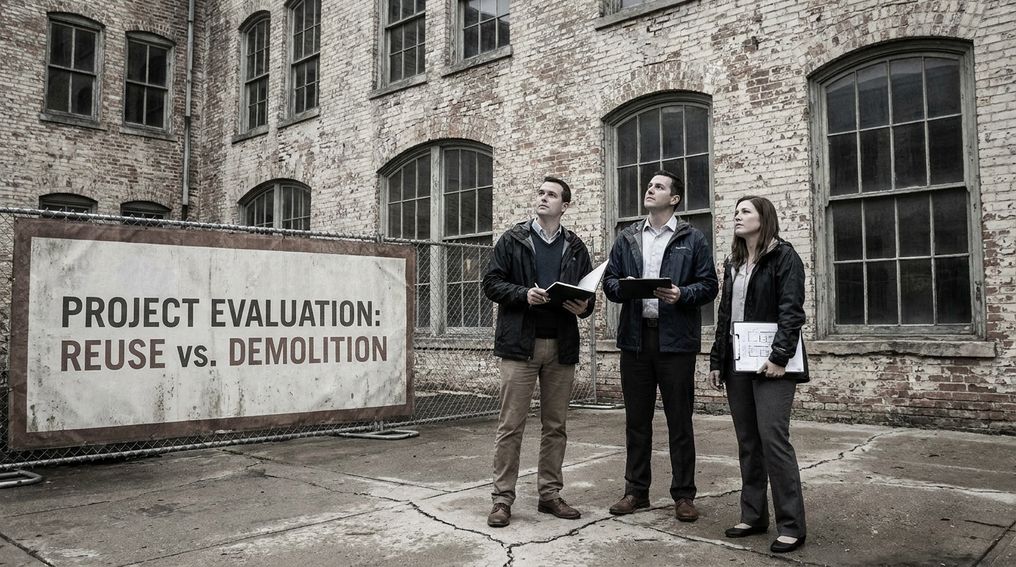
Developers should decide adaptive reuse vs demolition by testing whether the existing building can meet the target use at an acceptable cost, risk level, approval path, and market fit before major design money is spent.
A strong site with a vacant or underused building can look like an easy redevelopment play, but the wrong reuse-or-replace decision can lock you into code problems, hidden remediation costs, lender concerns, or public pushback. The right answer comes from disciplined due diligence: structure, hazards, zoning, code, incentives, schedule, sustainability, and exit value all need to be compared side by side.
Why The Adaptive Reuse Vs Demolition Decision Is An Asset Strategy
Adaptive reuse is not just a design choice. It’s an asset strategy that determines your capital stack, entitlement path, construction risk, operating profile, and resale story. A building that looks obsolete can still have value if its structure, location, zoning, and existing character support a profitable conversion. A building that looks charming can become a liability if its floor plates, environmental issues, or code upgrades consume the budget.
Start by defining the intended use and the business plan before judging the building. Office-to-residential conversion, hospitality reuse, mixed-use repositioning, light industrial conversion, and civic redevelopment all place different demands on structure, access, utilities, life safety, parking, and envelope performance. The same property can be a strong reuse candidate for one use and a poor candidate for another. Your test is not whether reuse is desirable; it’s whether reuse supports the income, approval path, and risk tolerance of the deal.
What Adaptive Reuse Actually Requires
Adaptive reuse means converting an existing building to a new or updated use while retaining meaningful parts of the building. That can include the structural frame, exterior walls, roof system, stairs, historic features, or site infrastructure. The more you retain, the more you preserve existing embodied value, but you also inherit the building’s past decisions. Old column grids, low ceiling heights, limited cores, aging mechanical systems, and nonstandard openings can shape the entire plan.
A suitable building needs a realistic match between the existing physical form and the proposed use. Large floor plates can work well for offices, schools, storage, or institutional uses, but they can be difficult for residential conversion if natural light, ventilation, and unit depth don’t pencil out. Historic buildings can attract tenant interest and public support, yet preservation rules may limit façade changes, window replacement, signage, or interior demolition. The building has to carry the new program without forcing a costly fight against its bones.
Feasibility Starts With Structure, Hazards, Zoning, And Code
Your first technical screen should cover structural condition, environmental hazards, zoning rights, building code upgrades, accessibility, fire protection, and utility capacity. A structural assessment should answer whether the frame, foundations, roof, lateral systems, and floor loads can handle the proposed use. Older buildings may need seismic retrofitting, reinforcement, roof replacement, stair upgrades, elevator work, or new fire-rated assemblies. If these items are discovered late, the project can lose months and capital before vertical work begins.
Environmental review deserves early attention because remediation can change the deal quickly. Asbestos, lead paint, mold, underground tanks, contaminated soil, and vapor concerns can affect demolition and reuse in different ways. Demolition may expose more waste handling and disposal costs, while reuse may require selective abatement in occupied or partially retained areas. A Phase I Environmental Site Assessment, targeted testing, and early abatement pricing help you avoid treating unknowns as contingencies that are too small to matter.
Compare Hard Costs, Soft Costs, Incentives, And Timeline Risk
A clean cost comparison has to include more than demolition cost versus renovation cost. Hard costs should include structural repairs, envelope upgrades, mechanical, electrical, plumbing, fire protection, accessibility, hazardous material abatement, selective demolition, new construction, and site work. Soft costs should include consultants, surveys, environmental reports, historic preservation specialists, legal support, entitlement work, lender requirements, insurance, and carrying costs. Adaptive reuse often needs deeper investigation before pricing feels reliable, so your predevelopment budget should reflect that.
Timeline risk is often where reuse projects surprise developers. Unknown conditions can slow design, procurement, permitting, and inspections. Specialty restoration labor and custom replacement materials can add cost and lead time. Demolition and new construction may provide cleaner sequencing, but that path can trigger its own delays through approvals, public opposition, debris management, and new construction cost exposure. Your model should assign schedule value to each path, not just construction value.
Use Incentives Without Letting Them Drive The Deal
Incentives can improve adaptive reuse economics, but they shouldn’t rescue a weak project on paper. The Federal Historic Preservation Tax Credit provides a 20 percent income tax credit for qualified rehabilitation of certified historic income-producing buildings. That can be meaningful, but it comes with eligibility rules, documentation, review standards, and timing requirements. If you plan around the credit, bring in tax, preservation, and legal advisors early enough to shape design decisions before they become expensive reversals.
Brownfield support can also matter when a site has contamination risk or a history of industrial use. The Environmental Protection Agency Brownfields Program provides grants and technical assistance for assessment and cleanup of contaminated properties. Local tools may include property tax abatements, façade grants, infrastructure support, zoning flexibility, or expedited review. Treat every incentive as a scored item: amount, certainty, timing, compliance cost, consultant cost, and effect on design flexibility.
Measure Sustainability And Community Risk Before Approvals Begin
Sustainability can shift the business case, especially for institutional capital, public-private projects, and owners with carbon goals. Reusing an existing structure can avoid the upfront embodied carbon tied to producing and transporting new materials. The National Trust for Historic Preservation’s building reuse research found that reuse often has lower environmental impacts than new construction across many building types and climates over a long life span. That does not mean every reuse project is automatically greener, but it does mean demolition needs a clear justification when a building can be retained.
Construction and demolition waste is another major factor. The Environmental Protection Agency has estimated hundreds of millions of tons of construction and demolition debris in the United States, with demolition accounting for more than 90 percent of total generation. For some projects, waste handling, landfill costs, salvage requirements, and public scrutiny affect more than the sustainability report. A demolition plan that ignores community reaction can face delays, appeals, and reputational damage, especially when the building has local identity or historic value.
Build A Side-By-Side Decision Scorecard
Use a side-by-side scorecard before you commit to a path. Compare reuse and demolition across the same categories: acquisition basis, hard cost, soft cost, incentive value, entitlement risk, code risk, environmental risk, schedule risk, financing risk, market demand, operating efficiency, and exit value. Assign each category a cost range, confidence level, and decision owner. This keeps the team from debating preferences when the real issue is evidence.
A practical scorecard should separate known costs from priced risks. Known costs include survey work, consultant fees, abatement quotes, utility upgrades, and structural repairs already confirmed. Priced risks include likely hidden damage, change orders, design revisions, review delays, and escalation exposure. If adaptive reuse only works when every risk lands low, the deal is fragile. If demolition only works after ignoring opposition, waste, and entitlement time, that path is not as clean as it looks.
When Demolition Is The Better Business Decision
Demolition can be the better decision when the existing building blocks the highest and best use of the site. If the structure is deteriorated, the floor plates don’t suit the market, ceiling heights are too low, or columns prevent efficient layouts, reuse can produce a compromised asset. Serious contamination, poor foundations, obsolete utilities, or major life-safety gaps can also push a project beyond a reasonable retrofit budget. In those cases, keeping the building may preserve the wrong thing.
New construction can also create value through better density, energy performance, tenant fit, operating efficiency, and financing clarity. A clean new building may lease faster if the target tenants need modern loading, flexible spans, reliable systems, or predictable maintenance. Demolition makes stronger business sense when zoning supports the replacement plan, approvals are achievable, waste handling is planned, and community risk is manageable. The decision should still account for salvage, documentation, and communication so the project does not create avoidable resistance.
When Adaptive Reuse Wins
Adaptive reuse often wins when the existing building has sound structure, useful floor plates, marketable character, and a location where replacement cost is rising. It can also win when approvals favor preservation, local stakeholders support retention, or incentives improve the capital stack. Buildings with strong exterior identity, durable materials, generous ceiling heights, and adaptable open areas can become distinctive assets. If the retained structure reduces upfront material demand and shortens certain construction activities, reuse may create a stronger story for capital partners and end users.
Reuse is especially attractive when the site’s existing entitlements, setbacks, nonconforming rights, or historic status protect value that a new project would lose. A building that already fits the street wall, has recognized local character, or qualifies for preservation support may offer advantages that new construction can’t easily recreate. The best candidates do not need heroic engineering to become useful. They need targeted upgrades, realistic programming, and enough market demand to reward the complexity.
Final Due Diligence Checklist And Decision Matrix
Before choosing adaptive reuse vs demolition, require the same discipline you’d use for acquisition underwriting. Confirm structure, hazards, code, zoning, utilities, access, parking, market demand, incentives, approvals, construction phasing, and financing assumptions. Ask your architect, contractor, structural engineer, environmental consultant, land-use attorney, and lender to identify the items most likely to change cost or schedule. Then price those risks instead of leaving them as vague notes.
Your decision matrix should give you a go, revise, or reject answer for each path. Reuse should move forward when the existing building supports the intended use, risks are priced, incentives are credible, and market value justifies the retrofit. Demolition should move forward when replacement creates stronger value, approval risk is acceptable, and retention would create an underperforming asset. If neither path works without optimistic assumptions, the right decision may be to renegotiate, redesign, partner, or pass.
What Should Developers Consider Before Choosing?
- Structural condition & code compliance
- Hazard remediation costs
- Historic status & available credits
- Market demand & total cost
- Embodied carbon & community impact
Choose The Path That Protects The Deal
The best decision is the one that protects the project from avoidable surprises. Adaptive reuse can unlock character, incentives, lower material waste, and community support, but it only works when the building can carry the new use without draining the budget. Demolition can produce a cleaner development path, yet it needs honest pricing for approvals, debris, public response, and lost embodied value. Compare adaptive reuse vs demolition with the same financial discipline, the same risk pricing, and the same market test. When the numbers, approvals, and building conditions point in the same direction, the decision gets much easier to defend.
Reference Links
- Environmental Protection Agency: Sustainable Management Of Construction And Demolition Materials
- National Park Service: Historic Preservation Tax Incentives
- National Trust For Historic Preservation: The Greenest Building
- Whole Building Design Guide: Adaptive Reuse
- Environmental Protection Agency: Brownfields Program
- Architecture 2030: Why The Building Sector
- Urban Land Institute.

Menachem Silber is a Brooklyn-based real estate developer and co-founder of Lightstone Management, with 15+ years leading affordable and mixed-use projects nationwide. He has overseen development of 1,000+ NYC housing units valued at $500M+, manages a multi-state rental portfolio, and, via Lightstone Holdings, invests in small-business lending and blockchain ventures.

